

Middle Floor Apartment
€225,000- Bedrooms
- 2
- Bathrooms
- 1
- Built
- 80 m²
- Terrace
- 8 m²
A relaxed coastal municipality where vineyard heritage, marina living, and quieter beaches meet.
Manilva: Where Vineyard Meets Sea
Climb the winding road from the coast and you'll find yourself in Manilva Pueblo, a traditional whitewashed village surrounded by Moscatel vineyards that tumble down towards the Mediterranean. It's a view that has changed remarkably little over centuries, and it captures something essential about this corner of the Costa del Sol: here, authentic Andalusian life continues alongside the region's coastal development, the two worlds existing in comfortable proximity rather than in conflict.
Manilva occupies the southwestern edge of Málaga province, where it borders Cádiz and the celebrated resort of Sotogrande. The municipality encompasses three distinct personalities: the hilltop village itself, the working Spanish seaside town of San Luis de Sabinillas, and the pretty marina of Puerto de la Duquesa. This diversity is perhaps Manilva's greatest asset, allowing residents to choose their preferred rhythm of life whilst remaining within minutes of the others.
The practical realities favour Manilva. Gibraltar Airport lies just 33 min away by car (approximately 27 kilometres), making it convenient for flights to and from the United Kingdom. Málaga Airport, with its greater range of international connections, is around 64 min drive (97 kilometres) via the AP-7 toll motorway or the scenic A-7 coastal road. The area sits squarely between two worlds: Estepona is 15 minutes north, Marbella 40 minutes, whilst the sophistication of Sotogrande begins immediately to the west.
Public transport is limited: buses run from Málaga to Sabinillas via the Algeciras route, but a car remains essential for making the most of the area. This is not a place designed around tourists; it's a working municipality where daily life unfolds at its own pace.
The Romans understood this coastline's value. At Castillo de la Duquesa, a handsome 18th-century fortress built to defend against pirates, archaeologists have uncovered remains of a substantial Roman settlement: thermal baths, a villa, fish salting factories, and a necropolis dating from the 1st to 5th centuries AD. The site speaks to the extraordinary wealth generated by the ancient garum trade, a fermented fish paste so prized in Rome that it commanded luxury prices.
The castle now houses the Museo Arqueológico Municipal de Manilva, where ceramics, coins, and personal effects excavated from the surrounding site paint a vivid picture of classical Mediterranean life. Entry is free, and the building itself, declared a Site of Cultural Interest, rewards exploration.
Nearby, in a valley accessible from Sabinillas, the Roman sulphur baths of La Hedionda still flow. Legend holds that Julius Caesar himself bathed here to cure a skin ailment during his time as governor of southern Hispania. The name translates as "the stinking one", a reference to the hydrogen sulphide that gives the waters their therapeutic properties and their distinctive aroma. The site remains popular with locals, who picnic under eucalyptus trees while children splash in the ancient chambers.
“Climb the winding road from the coast and you'll find yourself in Manilva Pueblo, a traditional whitewashed village surrounded by Moscatel vineyards that tumble down towards the Mediterranean.”
Manilva's beaches extend for eight kilometres, and even at the height of summer, they rarely feel crowded. Playa de Sabinillas, the main urban beach, stretches nearly two kilometres with dark sand backed by a lively promenade of bars, restaurants, and shops. It holds Blue Flag status and offers full facilities including lifeguards, water sports equipment hire, and children's play areas. During full moons in July and August, the beach hosts the Fiesta de la Luna, when thousands dress in white for beachside celebrations.
West of the marina, the beaches become progressively quieter. Playa de los Toros and Playa del Negro are favourites of those seeking solitude, whilst Punta Chullera, at the provincial border, offers rocky coves where naturism is common and respected. The Senda Litoral coastal path connects much of this shoreline, ideal for morning walks or gentle cycling.
Built in the 1980s, Puerto de la Duquesa has matured into a charming marina village that some compare favourably to its flashier neighbours. Its 328 berths accommodate vessels up to 20 metres, and the surrounding development rises over three levels filled with restaurants, bars, and boutique shops. The marina receives Blue Flag recognition annually.
The dining options reflect the area's international character. Delfines has served fresh seafood for over two decades, earning a loyal following. La Bodega offers honest Spanish tapas at sensible prices. For something more refined, Apricus Gastrobar provides elevated dining with views across the moored yachts. Indian, Italian, Thai, and Chinese options all have their advocates among the regular visitors.
Summer evenings bring craft markets and live entertainment, whilst the marina's proximity to both beaches and the fishing hamlet of El Castillo makes it a natural gathering point throughout the year.
What truly distinguishes Manilva from its coastal neighbours is wine. The Moscatel de Alejandría grape has been cultivated here since at least the 16th century, and whilst urban development has claimed perhaps 70% of the historic vineyards over recent decades, those that remain produce distinctive sweet wines and, increasingly, acclaimed dry whites.
Nilva Enoturismo leads efforts to preserve this heritage. Their guided tours visit the CIVIMA (Centro de Interpretación Viñas de Manilva), a small artisan winery, and the organic Viña del Peñoncillo vineyard, where tastings take place against views stretching to Gibraltar and Africa. The project has received the Skal International Award for sustainable tourism.
The annual Vendimia grape harvest festival, held over the first weekend of September, celebrates this tradition with flamenco performances, wine tastings, the competition for the largest grape bunch, and the ceremonial first grape stomping. It's a genuinely local event that captures the essence of pueblo life.
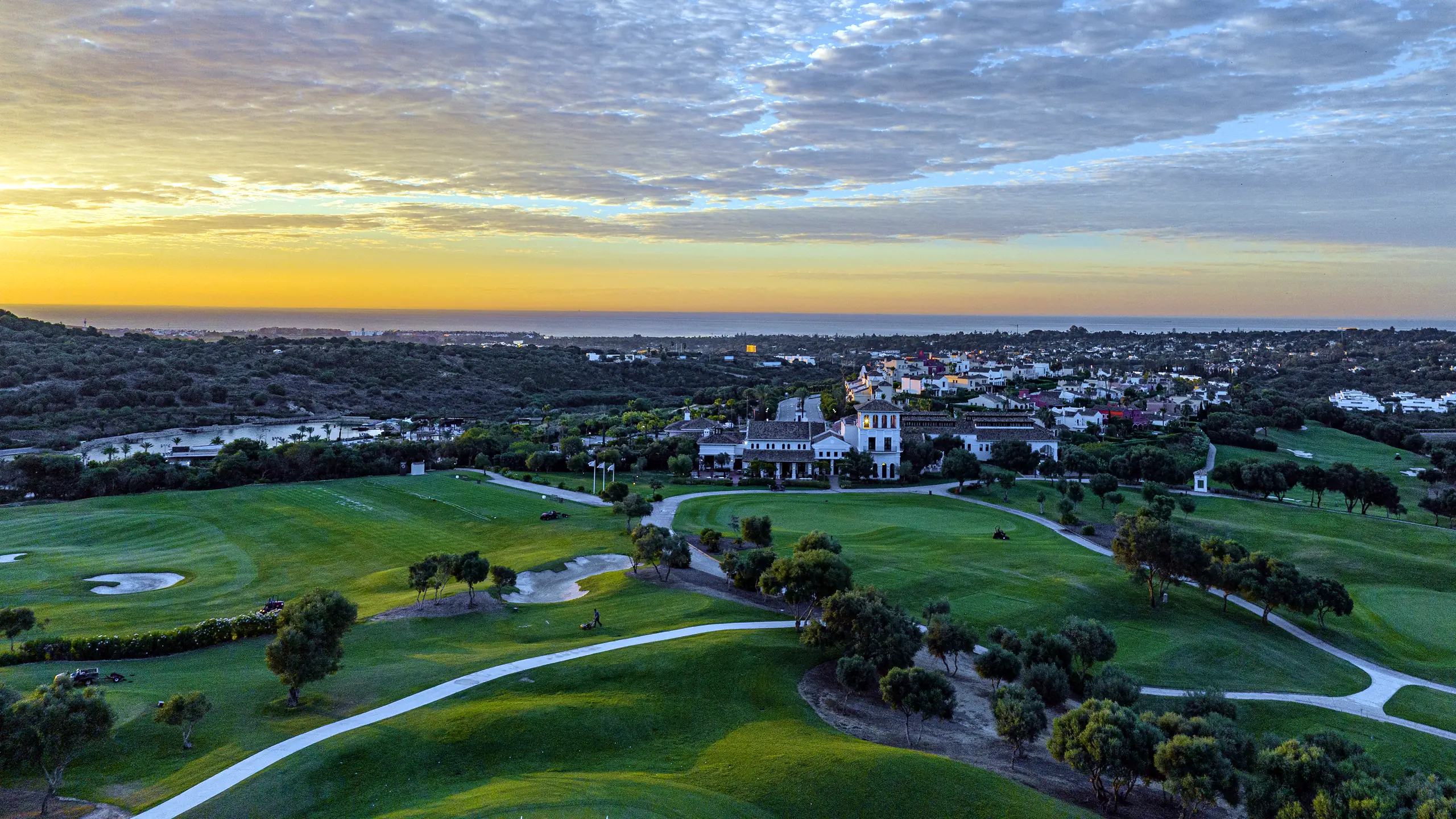
“La Duquesa Golf & Country Club offers an 18-hole, par-72 course designed by Robert Trent Jones Senior.”
La Duquesa Golf & Country Club offers an 18-hole, par-72 course designed by Robert Trent Jones Senior. The layout exploits dramatic hillside terrain, with the front nine presenting a technical, English-style challenge of narrow fairways and elevated greens, whilst the back nine opens up with spectacular views over the port, the mountains, and the distant Rock of Gibraltar. Recent investment has focused on course improvements, with a new hotel offering spa facilities, fitness centre, and restaurant.
The proximity to Sotogrande brings world-class sporting facilities within easy reach. La Reserva Club's Racquet Centre has operated since 1965, offering clay tennis courts, glass-walled padel courts (used for training by the GB Junior team), and comprehensive coaching programmes. The Santa María Polo Club hosts international tournaments, whilst equestrian facilities cater to everything from gentle hacks to competitive dressage. For golfers seeking variety, Valderrama, Alcaidesa Links, and La Cañada are all within 20 minutes.
Families find Manilva unexpectedly well-served. The municipality operates three state primary schools and one secondary school (IES Las Viñas), with strong provision for integrating non-Spanish-speaking children. For international education, Sotogrande International School is approximately 15 minutes away, offering the full International Baccalaureate programme from age 3 to 18. Queens British Grammar School near Estepona follows the UK curriculum, whilst the newly established Atlas American School provides US-standard education with IB diploma plans.
The town's sports facilities deserve particular mention. Municipal padel and tennis courts, a championship-level climbing wall, and an active football club offer affordable activities heavily subsidised by the local council.
Sabinillas houses the Centro de Salud San Luis de Sabinillas, providing public primary healthcare under the Andalusian health service. For emergencies and specialist care, Hospital Costa del Sol in Marbella serves as the regional reference hospital, whilst private options including Hospiten Estepona and Cenyt Hospital offer 24-hour care closer to hand. Numerous dental practices and pharmacies operate locally, many with English-speaking staff.
The cost of living remains notably lower than in Marbella or Estepona. A meal at a local restaurant costs around €12, a beer rarely exceeds €3, and morning coffee runs to €2. Friday brings the weekly market to Sabinillas, transforming the promenade with stalls selling seasonal produce, clothing, and artisan goods.
Beyond the Vendimia, Manilva maintains a rich festive calendar. The Feria de Agosto (typically the second week of August) brings five days of celebrations to the municipal fairground, with fairground rides, live music, and the crowning of the festival royalty. The Virgen del Carmen procession on 16th July sees the fishing communities of El Castillo and Sabinillas carry their patron saint's image to the sea, one of the coast's more moving traditions. The night of San Juan in late June brings bonfires to the beaches and the burning of cloth effigies stuffed with sawdust.
Manilva suits those who value authenticity over glamour. The British, Scandinavian, and Northern European communities are well-established but integrate rather than dominate: this remains a working Spanish municipality where the rhythms of local life take precedence. It attracts families seeking affordable quality of life with good schooling options, retirees wanting the Costa del Sol climate without the prices, and those who work in nearby Gibraltar and seek a genuine home rather than a resort.
The pace is slower, the nightlife quieter, the beaches emptier. Property prices remain significantly below the regional averages. For some, these are limitations; for others, precisely the point. Manilva asks only that you meet it on its own terms, and rewards those who do with a life that feels less like a holiday destination and more like somewhere to belong.
The map is from Google Maps, which uses cookies.
Discover neighbouring Sabinillas and Casares, and other coastal communities.


