

Townhouse
€715,000- Bedrooms
- 3
- Bathrooms
- 2
- Built
- 165 m²
- Terrace
- 14 m²
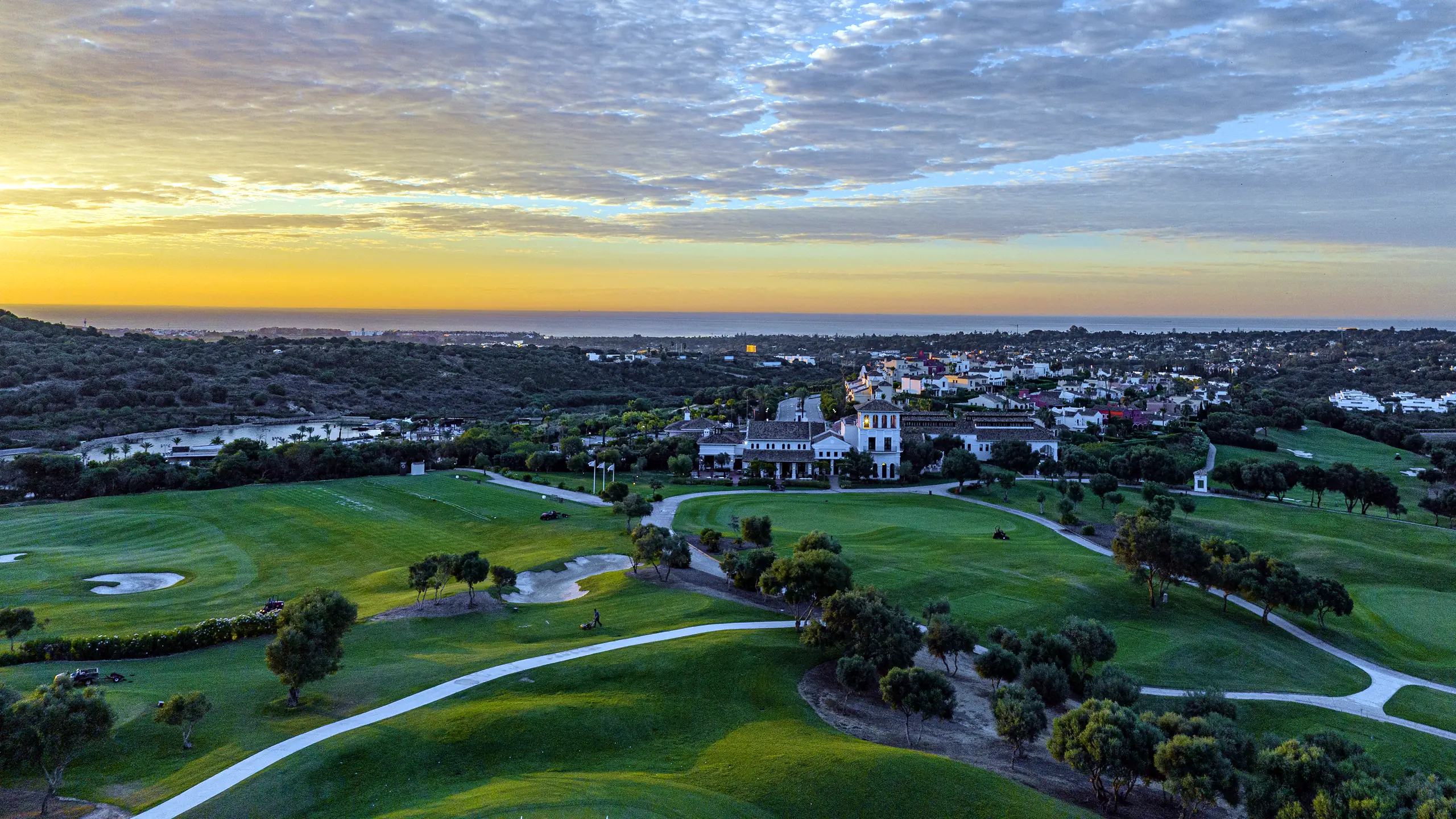
The Garden of the Costa del Sol, pairing a polished old town with family-friendly beaches and modern infrastructure.
Estepona: The Garden of the Costa del Sol
Walk through the old town of Estepona on any given morning and you will understand why the town has earned its nickname: El Jardín de la Costa del Sol . Thousands of colour-coordinated flower pots cascade from whitewashed facades, more than sixty large-scale murals transform apartment blocks into open-air canvases, and the three glass domes of the Orchidarium rise from the pedestrianised centre like a botanical cathedral. This is a town that has quite deliberately reinvented itself over the past decade, and the results are remarkable.
What makes Estepona's transformation so compelling is that it hasn't come at the expense of authenticity. Unlike some of its neighbours, Estepona grew organically from a working fishing village over centuries rather than being purpose-built for tourism. The harbour still functions as a commercial fishing port: head there on a Sunday morning and the weekly market spills across the quayside in a colourful sprawl of produce, crafts and clothing that draws visitors from across the western Costa del Sol. The old town retains its maze of narrow streets, its unhurried plazas, and its distinctly Spanish character. Estepona feels lived-in, in the best possible sense.
Since 2011, Estepona's ambitious urban renewal programme has pedestrianised and beautified over 130 streets, roughly eighteen kilometres of the historic centre, planting more than twelve thousand flower pots and commissioning the Ruta de Murales Artísticos , a walking trail of street art that includes some of the largest murals in Spain. The Orchidarium, inaugurated in 2015, houses over 1,500 orchid species beneath its soaring glass domes and has become a symbol of the town's creative ambition. A modern theatre-auditorium, new green spaces and the extension of the coastal Senda Litoral walkway have further cemented the regeneration. The 5,000-year-old Corominas Necropolis, discovered during motorway construction and now displayed in a purpose-built underground visitor centre in Parque de los Pedregales, adds genuine archaeological depth to a town already rich in character.
The result is a community that appeals equally to those seeking traditional Andalusian charm and those who appreciate contemporary urban design. Estepona's population has grown steadily, drawing a cosmopolitan mix of Spanish families, British and Scandinavian expatriates, and an increasing number of northern European professionals working remotely.
Estepona sits at the western end of the Costa del Sol, approximately 80 km from Málaga Airport (around 55 min via the AP-7 toll motorway) and just 45 km from Gibraltar Airport, making it particularly convenient for those with ties to the United Kingdom. The A-7 coastal highway and the AP-7 autopista provide straightforward connections in both directions, while the town's position between the Mediterranean and the Sierra Bermeja mountains gives it a distinctive microclimate, sheltered from the Levante east wind and blessed with over 325 days of sunshine annually.
“Walk through the old town of Estepona on any given morning and you will understand why the town has earned its nickname: El Jardín de la Costa del Sol.”
Estepona's 21 km of coastline offers genuine variety. Playa de la Rada, the main town beach, stretches over 2.5 km along an attractive Paseo Marítimo promenade and has full facilities including lifeguards, showers, play areas and wheelchair access, with convenient underground parking beneath the seafront. Playa del Cristo, a sheltered cove on the far side of the fishing port, is a favourite among families: its shallow, calm waters and south-facing aspect make it one of the most child-friendly beaches on the coast, though arriving early in summer is advisable. Both hold Blue Flag status. Further along the coast, smaller beaches such as Playa del Padrón and Playa de Guadalobón offer a quieter experience, while Costa Natura, to the west, holds the distinction of being Spain's first official naturist beach.
The Costa del Sol is often called the Costa del Golf , and Estepona more than justifies the moniker. Seven courses fall within the municipal boundaries alone. El Paraíso Golf Club, designed by Gary Player in 1973, remains one of the coast's most respected championship courses. Atalaya Golf and Country Club offers two 18-hole layouts, while Valle Romano provides a tournament-standard course with USGA specifications. Azata Golf, one of the newer additions, delivers sea views and an accessible layout for all levels. La Resina Golf and Country Club and El Campanario (the latter a Manuel Piñero design with country-club amenities including pools, gym and tennis courts) round out the local offering. The prestigious Finca Cortesin and Valderrama are both within easy driving distance.
Racquet sports thrive here. The Club de Tenis y Pádel Estepona, set across 24,000 square metres in the Forest Hills urbanisation, offers five World Padel Tour-standard courts, clay tennis courts and, since 2024, four dedicated pickleball courts. The Unicorn Racket Club in town combines padel facilities with a gym, wellness centre and social restaurant. El Campanario's country club adds further tennis and padel options.
Beyond the fairways and courts, the Escuela de Arte Ecuestre Costa del Sol is one of Spain's most notable equestrian centres, recognised by the British Horse Society and hosting regular exhibitions of Andalusian horsemanship. Sierra Bermeja, rising to 1,449 metres at the peak of Los Reales directly behind the town, provides mountain biking, hiking and canyoning. The guided Guadalmina River canyoning experience is a particular favourite. The marina, with 447 berths, supports sailing, diving, jet-skiing and paddle boarding, while Selwo Aventura, a sprawling safari-style animal park on the town's eastern edge, is a reliable family day out.
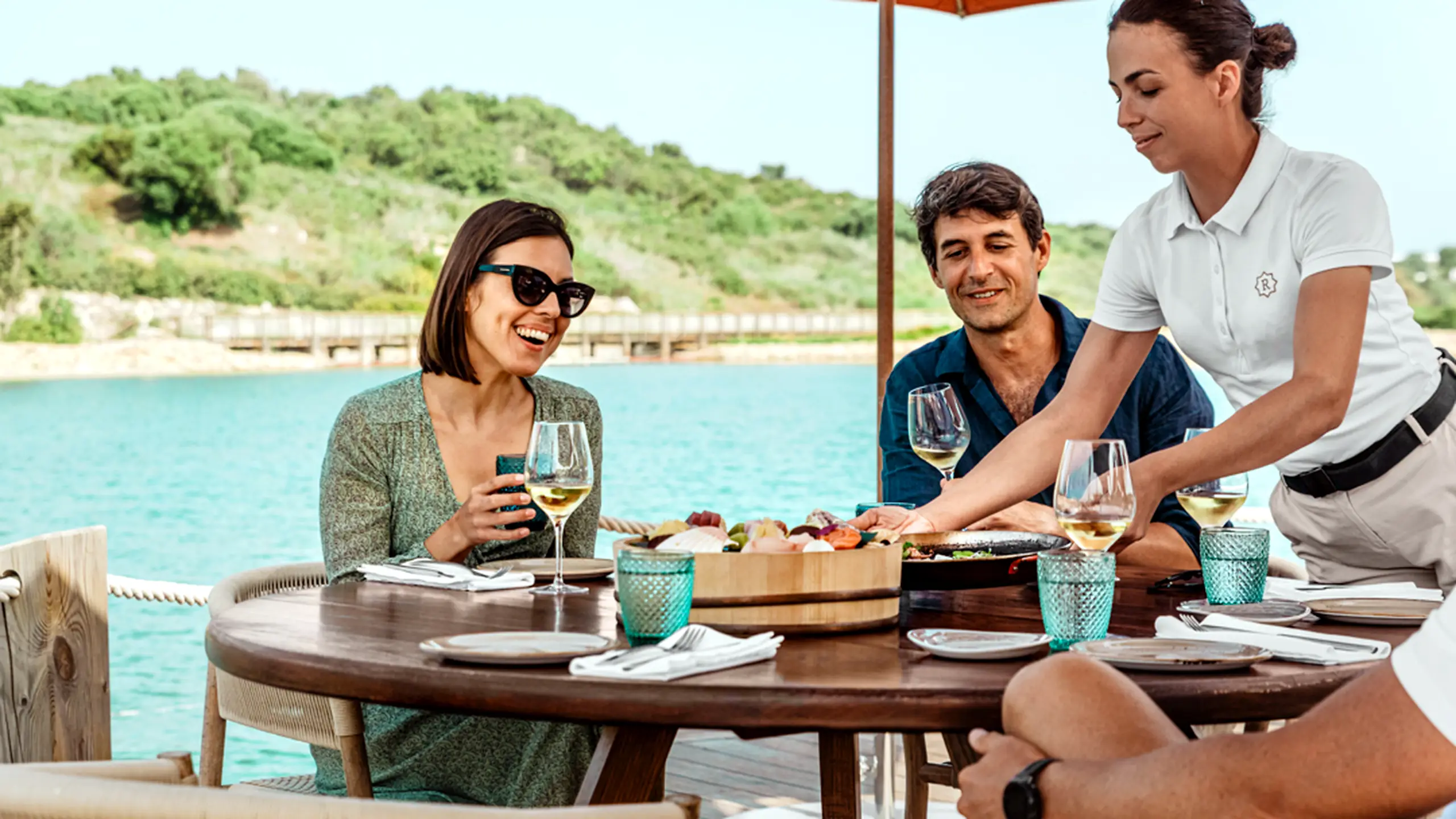
Estepona's dining scene reflects its dual character. Along the port and marina, seafood restaurants serve the catch of the day: espetos (sardines grilled on skewers over open coals) are practically a local religion at the chiringuitos that line the beaches. The old town's Calle Real and the small plazas branching off it are thick with tapas bars, family-run restaurants and an increasing number of international options. The marina area comes alive on summer evenings, with cocktail bars and restaurants occupying the waterfront terraces.
Shopping follows a similar pattern: the old town's Calle Terraza is the main artery for independent boutiques and local shops, while the broader municipality offers larger retail options. The Sunday market at the port remains the social event of the week: arrive early, buy your fresh produce, and settle into a harbourside café to watch the town go by.
Estepona is not known for the nightclub culture found further east in Marbella or Puerto Banús, and many residents consider this a strength rather than a limitation. The town's evening rhythm tends towards long dinners, paseo strolls along the promenade, and drinks at marina-side terraces rather than late-night revelry.
“The Feria y Fiestas Mayores, held during the first week of July, is Estepona's flagship celebration, a week of flamenco, live music, fairground rides and open-air casetas that effectively brings working life to a standstill.”
The Feria y Fiestas Mayores , held during the first week of July, is Estepona's flagship celebration, a week of flamenco, live music, fairground rides and open-air casetas that effectively brings working life to a standstill. The feast of the Virgen del Carmen on 16 July sees a maritime procession of decorated fishing boats carrying the patron saint along the coast, accompanied by crowds on the shore. The Quema de los Júas on the night of San Juan (23 June) marks the summer solstice with bonfires on the beach, while the Virgen de los Remedios celebrations in August and San Isidro Labrador processions in May add further colour to the calendar. The Costa del Sol Horror and Fantasy Film Week in September brings an unexpected cultural counterpoint, with screenings, workshops and exhibitions. The Costa del Sol Gran Fondo, a 127 km international cycling event through Sierra Bermeja, has established Estepona as a serious destination for competitive cycling.
Families relocating to Estepona will find a strong selection of schools. The International School of Estepona in El Paraíso follows the British National Curriculum for ages 2 to 12, while Mayfair International Academy offers British-curriculum education from ages 3 to 18. The Atalaya International School, positioned between Estepona and Marbella, provides bilingual English-Spanish instruction through to the International Baccalaureate. Atlas American School of Málaga, in the Selwo Hills area, offers a full American curriculum from kindergarten to Grade 12 alongside high-performance sports programmes. Colegio San José, included in the Forbes list of Spain's fifty best private schools, covers all stages from infant through to IB, with strong language provision in English, French and German. The Deutsche Schule Málaga, near Ojén, serves Estepona families via dedicated bus routes.
Estepona has invested significantly in healthcare infrastructure. The Hospital de Alta Resolución de Estepona, a modern public facility spanning over 14,000 square metres, opened in 2019 following a €17.7 million investment and provides emergency, surgical, outpatient and diagnostic services under the Andalusian Health Service (SAS). Private options include Hospiten Estepona, part of an international hospital group, with 24-hour emergency care and multilingual staff, and Hospital Cenyt, offering over forty medical specialities. The Hospital Costa del Sol in Marbella, one of the most highly rated public hospitals in Andalusia with approximately 400 beds, is roughly twenty minutes' drive east. Hospital Quirónsalud Marbella, part of Spain's leading private hospital group, and HC Marbella International Hospital are similarly accessible.
Estepona occupies a particular niche on the Costa del Sol. It offers the infrastructure, international schools and healthcare of a substantial town (its municipality covers 137 square kilometres) while retaining the atmosphere of a place where local life genuinely predominates. It suits families drawn to its beaches, schools and outdoor lifestyle; golf enthusiasts with seven courses on the doorstep and dozens more within half an hour; and retirees or remote workers seeking Mediterranean living without the intensity of Marbella or the quiet of the smaller pueblos to the west. Its position between two international airports and its improving transport links add practical convenience.
On a warm evening, the Paseo Marítimo fills with joggers, families and couples walking towards the marina as the sun drops behind Gibraltar in the distance. It is a scene repeated nightly, unremarkable in its familiarity, and quietly persuasive in what it says about the quality of daily life here. Estepona does not shout for attention. It simply grows on you.
The map is from Google Maps, which uses cookies.
Explore nearby communities and other settings on the Costa del Sol.


