

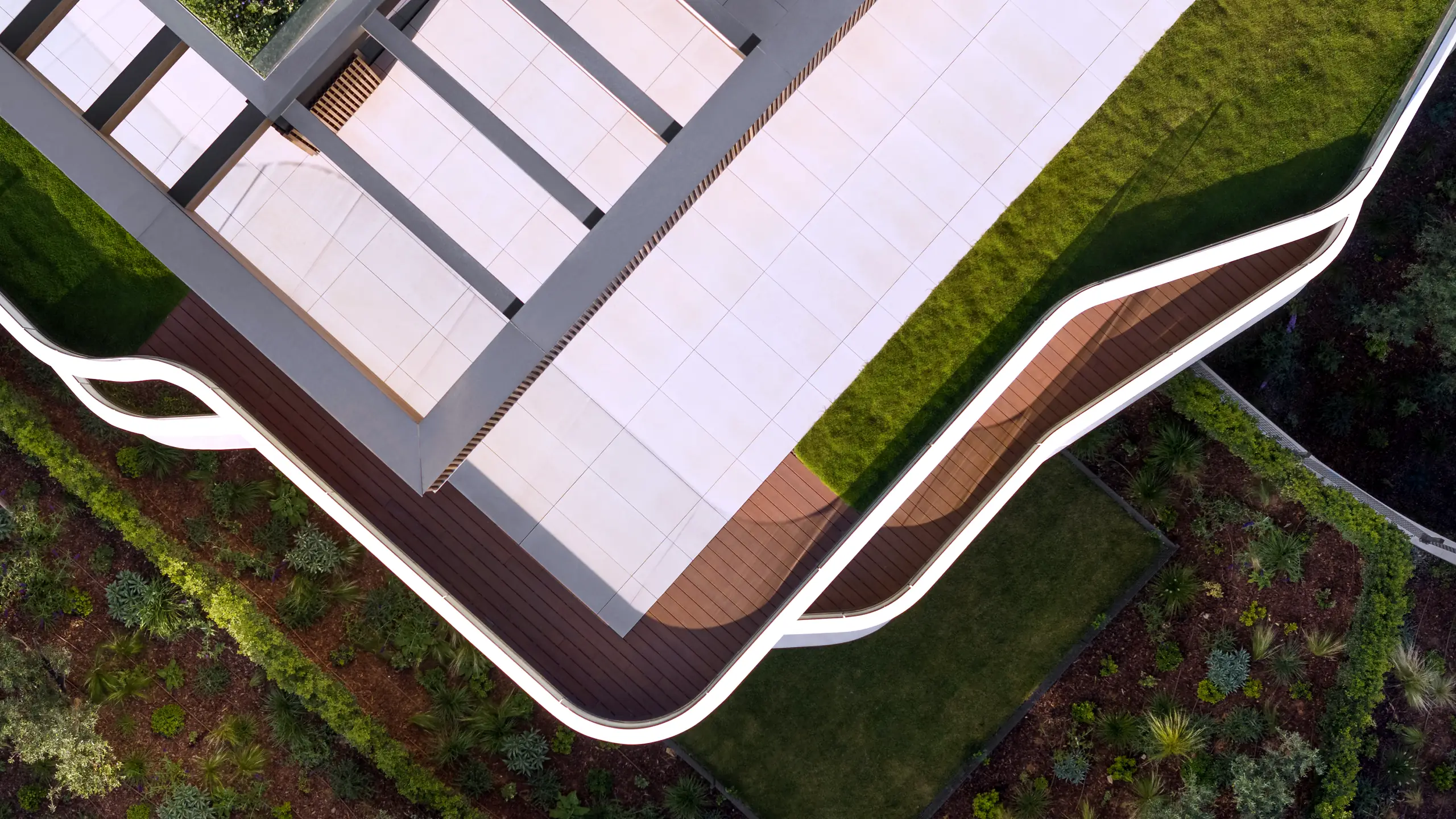
Penthouse Duplex
€725,000- Bedrooms
- 3
- Bathrooms
- 3
- Built
- 141 m²
A dynamic Mediterranean capital blending culture, commerce, and an increasingly international lifestyle.
Málaga: The Capital That Rewrote Its Own Story
For decades, Málaga was where you landed and kept driving: west to Marbella, east to Nerja, anywhere but here. That era is emphatically over. Through a deliberate, billion-euro cultural reinvention, Picasso's birthplace has transformed itself into one of Southern Europe's most compelling cities to live in: a place where Moorish fortresses overlook contemporary art museums, where tech entrepreneurs share tapas bars with third-generation fishermen, and where the Mediterranean is never more than a fifteen-minute walk from anywhere that matters.
The city now houses over forty museums and galleries, a thriving technology sector anchored by the Málaga TechPark, three Michelin-starred restaurants, and a property market that has finally caught the attention of luxury buyers who once looked straight past it. What Málaga offers that resort towns along the coast cannot is substance: the infrastructure, culture, and year-round vitality of a real city, wrapped in three hundred days of annual sunshine.
Málaga's historic centre is remarkably compact and endlessly layered. The eleventh-century Alcazaba fortress gives way to the Roman Theatre at its base, itself dating to the first century BC. Above both sits the Castillo de Gibralfaro, offering what may be the finest panoramic view on the entire Costa del Sol. Yet this is not a city preserved in amber. The Museo Picasso Málaga, housed in the sixteenth-century Palacio de Buenavista, opened in 2003 with nearly three hundred works donated by the artist's family and effectively launched the city's cultural renaissance. The Centre Pompidou Málaga followed in 2015, the first Pompidou outpost outside France, its colourful glass cube at the Muelle Uno port becoming an instant landmark. The Carmen Thyssen Museum focuses on nineteenth-century Spanish painting, whilst the Centre for Contemporary Art (CAC) anchors the Soho district, a formerly neglected neighbourhood now alive with international street art under the MAUS (Málaga Arte Urbano Soho) initiative.
The dining scene has matured in step. José Carlos García, at Muelle Uno, holds a Michelin star for his contemporary interpretations of Malagueño coastal cuisine: think boquerones with rice crisps and pipirrana, or hake with beetroot and caviar gazpachuelo. Blossom, which received its star in 2025, has relocated to an elegant space within the Museo de Málaga, complete with views of the Alcazaba. And in late 2025, Palodú became the city's newest starred restaurant, its dual-chef concept drawing on the best of the Atarazanas market nearby. Beyond fine dining, the real culinary soul of Málaga lives in its tapas bars and chiringuitos: El Pimpi remains a beloved institution near the Alcazaba, whilst the Pedregalejo seafront is the place for espetos de sardinas grilled over open coals in the traditional manner.
Málaga's relationship with its coastline has been utterly reimagined. The regeneration of Muelle Uno transformed a neglected commercial port into an elegant waterfront promenade of boutiques, restaurants, and the Pompidou's gleaming cube. The Paseo Marítimo Pablo Ruiz Picasso stretches eastward, connecting a succession of distinct beaches along the city's fourteen kilometres of coastline.
Playa de la Malagueta, the most central, sits barely ten minutes on foot from the cathedral. At 1,200 metres long, it is well-equipped with lifeguards, lounger hire, and beachfront restaurants, though it fills quickly in high summer. La Caleta, the next beach east, feels marginally more refined: the neighbourhood behind it was the preferred retreat of Málaga's nineteenth-century bourgeoisie, and their grand villas still line the streets above. It holds both Blue Flag and Q Quality Seal distinctions. Baños del Carmen, a small cove that was once an elite bathing pavilion, now draws a younger, more bohemian crowd and offers some of the city's finest sunsets.
Further east, Pedregalejo retains the character of the fishing village it once was, its beachfront divided into intimate coves by stone breakwaters. This is where locals come for leisurely weekend lunches of fried fish and cold beer, and the neighbourhood behind the promenade, increasingly popular with language students and young professionals, has a relaxed, villagey feel that contrasts pleasantly with the bustle of the centre. El Palo extends the seafaring tradition further still, with its own dedicated following among those who prefer authenticity over polish.
“For decades, Málaga was where you landed and kept driving: west to Marbella, east to Nerja, anywhere but here.”
Perhaps no single development has reshaped Málaga's identity, and its property market, more profoundly than its emergence as a European technology hub. The Málaga TechPark, founded in 1992 on the city's western fringe, now hosts over 700 companies employing upwards of 25,000 professionals. Google, Oracle, Huawei, Vodafone, and Accenture all maintain operations here, whilst homegrown successes like Freepik (the graphic resource platform acquired by Swedish fund EQT) demonstrate genuine entrepreneurial depth.
The University of Málaga works closely with the TechPark, feeding a pipeline of qualified graduates into fields from cybersecurity to artificial intelligence. For property buyers, the practical implication is significant: Málaga now attracts a year-round professional population that underpins rental demand and community vitality in a way that purely seasonal resort destinations cannot match. The city's MalagaWorkBay initiative actively courts international remote workers, and the growing community of digital nomads (drawn by fibre-optic connectivity, coworking spaces, and an enviable cost-of-living-to-quality-of-life ratio) has added yet another dimension to the city's increasingly cosmopolitan character.
Málaga is not a golf destination in the way that Marbella or Benahavís are, but several well-regarded courses lie within easy reach. Parador de Málaga Golf, designed by Tom Simpson, is the closest, an atmospheric links-influenced course right beside the airport with private beach access. Guadalhorce Club de Golf, redesigned by Miguel Ángel Jiménez, offers a strong 18-hole test roughly ten minutes west of the city. El Candado, a sociable 9-hole members' club on the eastern coastline, doubles as a sports and social hub with tennis courts, padel courts, swimming pools, and a well-regarded restaurant.
Padel, the sport that has swept Spain, is exceptionally well served. Finura Padel & Gym offers seven panoramic indoor courts with climate control, whilst clubs like Club Deportivo León XIII and Fantasy Padel provide further options across the city. The Inacua centre combines racquet courts with a full gym, spa, and wellness offering.
The beachfront promenade itself serves as a natural fitness corridor (runners, cyclists, and walkers share the path daily), whilst the Montes de Málaga natural park, just north of the city, provides proper hiking terrain for those wanting to escape the coast.
Families relocating to Málaga will find a mature educational infrastructure. The British School of Málaga, established in 2000, offers the English National Curriculum from ages three to eighteen and is consistently rated among the best international schools in the region. Novaschool Sunland International provides an alternative British curriculum option, whilst MIT School in the TechPark district combines Spanish, American, and IB pathways, fitting for a city with such a strong technology orientation. Swans International School offers GCSE and IGCSE courses alongside the International Baccalaureate Diploma. The University of Málaga itself serves over 35,000 students across its campuses.
Healthcare provision is comprehensive. Hospital Quirónsalud Málaga, opened in 2009, is one of the region's leading private facilities, with over 200 specialists and notably strong paediatric and neonatal departments. Vithas Málaga Hospital, centrally located on Avenida Pintor Sorolla, offers 24-hour emergency care and is the Costa del Sol's reference centre for early childhood care. On the public side, Hospital Regional Universitario de Málaga and Hospital Clínico Universitario Virgen de la Victoria between them provide comprehensive specialist services. The nearby Vithas Xanit International Hospital in Benalmádena, accredited by the Joint Commission International, offers multilingual care in sixteen languages, serving the coast's significant international population.
“Málaga's calendar is punctuated by celebrations that reveal the city's character more vividly than any brochure.”
Málaga's calendar is punctuated by celebrations that reveal the city's character more vividly than any brochure. Semana Santa, typically in April, is a dramatic and deeply felt affair: forty-two brotherhoods carry elaborate floats through the historic centre in processions designated as Fiestas of International Tourist Interest. The Feria de Málaga in mid-August (16th to 23rd in 2025) is the city's exuberant counterpoint, a week-long festival commemorating the Christian reconquest of 1487, split between daytime celebrations in the historic centre and a night fair at the Real del Cortijo de Torres. Unlike Seville's feria, the casetas here are open to all. The Noche de San Juan on 23rd June sees bonfires lit along every beach to welcome the summer. And from late November, Calle Larios, the city's principal boulevard, is illuminated by an increasingly spectacular Christmas light display that has become an attraction in its own right. The Málaga Jazz Festival in November brings international performers to the Teatro Cervantes, rounding out a cultural programme that runs far deeper than summer entertainment.
Málaga-Costa del Sol Airport sits just eight kilometres southwest of the city centre, roughly a fifteen-minute drive via the MA-21 motorway, or a twelve-minute journey on the Cercanías commuter rail (line C1). The airport handles direct flights to over 130 destinations across Europe, North Africa, and the Middle East, making it one of Spain's best-connected international gateways. The AP-7 motorway provides swift coastal access west toward Marbella (50km, approximately 40 minutes) and east toward Nerja (55km, roughly 45 minutes). The AVE high-speed rail connects Málaga to Madrid in under two hours and thirty minutes, and to Córdoba in under an hour, placing the great Andalusian cities within practical day-trip distance.
Within the city, the Metro (two lines), an extensive bus network, and a growing cycling infrastructure make car-free living entirely viable, a genuine rarity on the Costa del Sol.
Málaga is not for everyone on the coast, and that is precisely its appeal. It suits those who want the cultural depth and professional infrastructure of a real city without sacrificing the Mediterranean climate and lifestyle. It attracts a notably diverse community: Spanish professionals, Northern European relocators, tech-sector migrants, academics, artists, and a growing cohort of younger international buyers drawn as much by career opportunity as by sunshine. It is cosmopolitan without being a resort, historic without being sleepy, and ambitious without losing the unhurried Andalusian rhythm that makes daily life here so pleasurable. On a Tuesday evening in Pedregalejo, as the sun drops behind the city and the scent of grilling sardines drifts from the chiringuitos, you understand why so many people who once drove straight through now choose to stay.
The map is from Google Maps, which uses cookies.
Explore nearby communities and other settings on the Costa del Sol.


